

The Art of Situational Leadership for Startup Success
One moment you're a lone wolf with a vision, the next you're leading a ragtag band of passionate individuals towards a shared dream.
But how do you, as the founder, effectively lead such a diverse group, all at different stages of their professional journeys?
Enter situational leadership, a powerful tool that equips you to adapt your leadership style to unlock the full potential of your team.
What is Situational Leadership?
Developed by Paul Hersey and Ken Blanchard, situational leadership shifts the focus from a one-size-fits-all approach to a dynamic model that considers two key factors:
- Task-Specific Competence (What): This refers to the individual's skill and knowledge necessary to complete a specific task.
- Psychological Commitment (How): This encompasses the individual's motivation, confidence, and willingness to take ownership of the task.
By analyzing these factors, founders can identify their team members' development levels and adjust their leadership style accordingly.
The Four Leadership Styles of Situational Leadership:
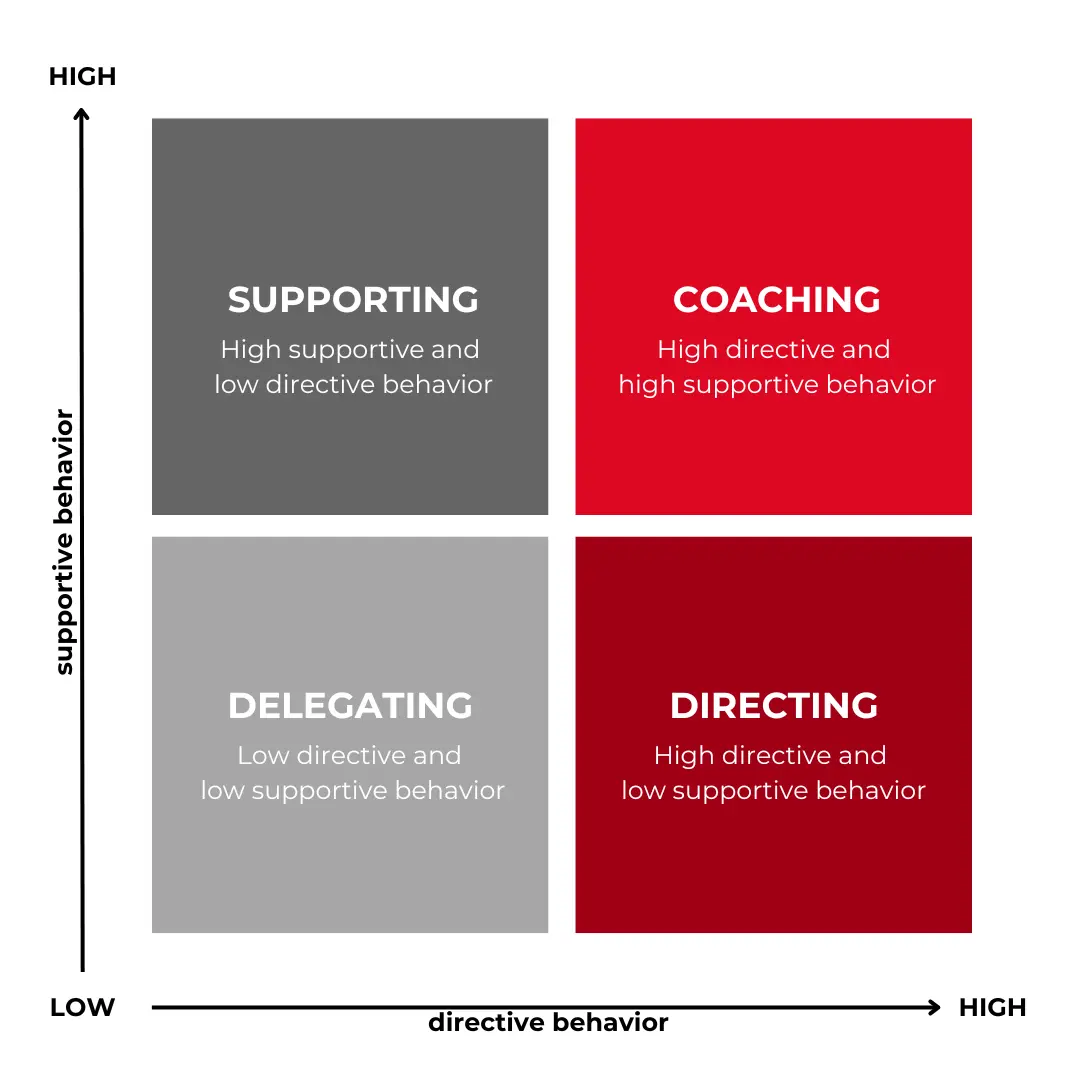
The Hersey Blanchard Situational Leadership Model outlines four leadership styles:
- Directing (High Task/Low Relationship): This style is ideal for situations where team members are new or lack specific skills. The leader provides clear instructions, sets goals, and closely monitors performance.
- Coaching (High Task/High Relationship): Used for individuals who are willing but lack the necessary skills. The leader offers guidance, explains the "why" behind tasks, and provides opportunities for practice.
- Supporting (Low Task/High Relationship): This approach works well with team members who have the skills but may lack confidence. The leader focuses on building trust and providing emotional support while still offering guidance.
- Delegating (Low Task/Low Relationship): This empowers highly skilled and motivated individuals. The leader sets clear expectations and delegates tasks, allowing the team member to take ownership and make decisions.
Situational Leadership in Action: A Founder's Guide
Here's how you, as a founder, can leverage situational leadership:
- Identify Development Levels: Assess your team members' competence and commitment regarding specific tasks. Observe their performance, communication style, and initiative.
- Flex Your Leadership Style: Adapt your approach based on the development level. Provide clear instructions for new hires, while delegating complex tasks to experienced developers.
- Focus on Growth: Situational leadership isn't just about completing tasks. Use coaching conversations to develop skills and encourage team members to take on more challenging roles.
- Communicate Effectively: Clearly explain expectations, goals, and the "why" behind tasks regardless of leadership style.
- Provide Feedback & Recognition: Offer constructive feedback tailored to the development level. Celebrate successes and acknowledge individual contributions.
The Benefits of Situational Leadership for Startups:
- Boosts Team Morale and Engagement: By catering to individual needs, founders create a more supportive and motivating environment.
- Improves Individual Performance: Matching leadership style to development level leads to faster skill development and higher productivity.
- Empowers Decision-Making: Delegation fosters ownership and encourages team members to take initiative.
- Provides a Framework for Growth: Situational leadership equips founders to develop well-rounded individuals who can take on new challenges.
Remember:
There's no "right" leadership style. It's about adapting to best support your team and navigate the ever-changing startup landscape. By mastering situational leadership, you can unlock the full potential of your team and propel your startup towards success.