
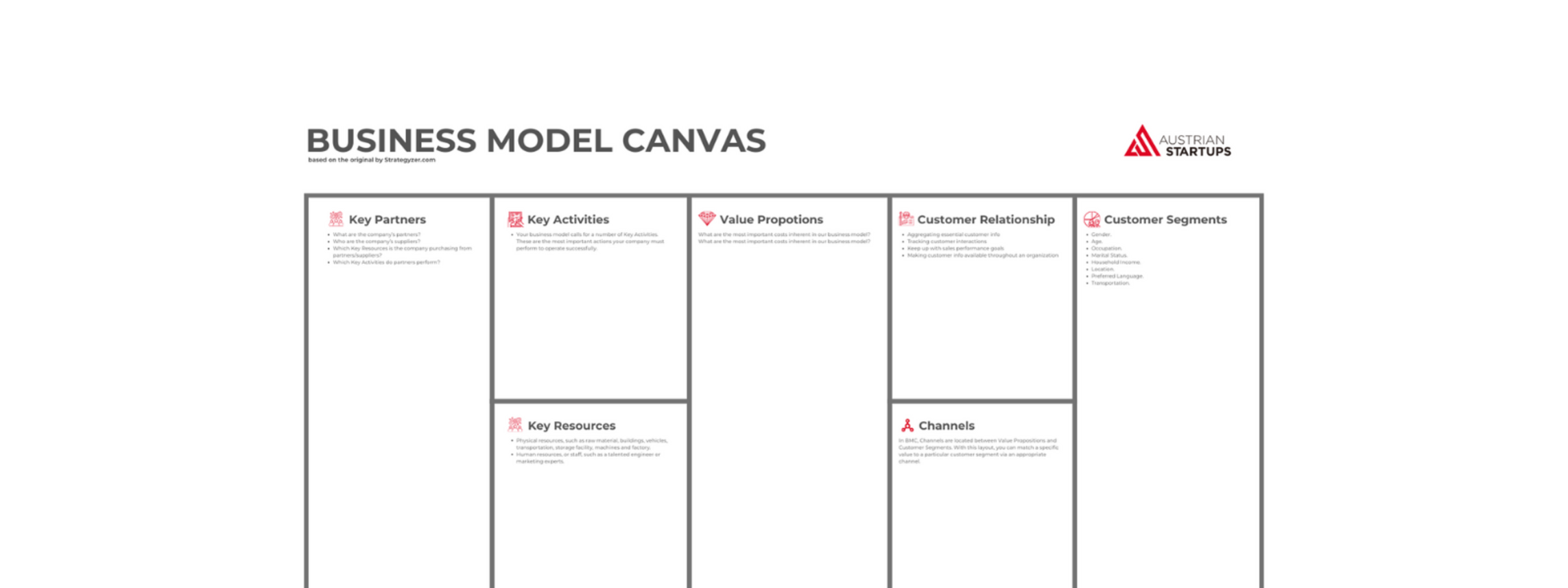
The Business Model Canvas: A Founder's Essential Tool
A well-defined business model is crucial for success. The Business Model Canvas (BMC), originally created by Strategyzer.com, is a simple yet powerful tool for startup founders to articulate, visualize, and refine their business strategies. This versatile framework provides a structured approach to understanding the key elements of a business and how they interrelate. It's a great way to get you discussing and understanding the details of your idea and what it might take to actually make it happen.
The Nine Building Blocks of a Successful Business Model
The BMC is composed of nine interconnected building blocks that represent the core aspects of a business:
-
Customer Segments: Who are your ideal customers? What are their needs, wants, and pain points?
-
Value Propositions: What unique solutions do you offer to your target customers? How do you solve their problems and make their lives better?
-
Channels: How do you reach and communicate with your customers? What channels do they prefer for discovering, buying, and using your products or services?
-
Customer Relationships: How do you build and maintain strong relationships with your customers? What touchpoints and interactions do you have with them?
-
Revenue Streams: How do you generate income from your customers? What value do you capture in exchange for your offerings?
-
Key Resources: What are the essential assets, tangible or intangible, required to operate your business?
-
Key Activities: What core activities do you need to undertake to deliver your value propositions and satisfy customer needs?
-
Key Partnerships: What alliances and collaborations are essential for your business to operate effectively?
-
Cost Structure: What are the ongoing expenses required to run your business? How do you minimize costs while maintaining profitability?
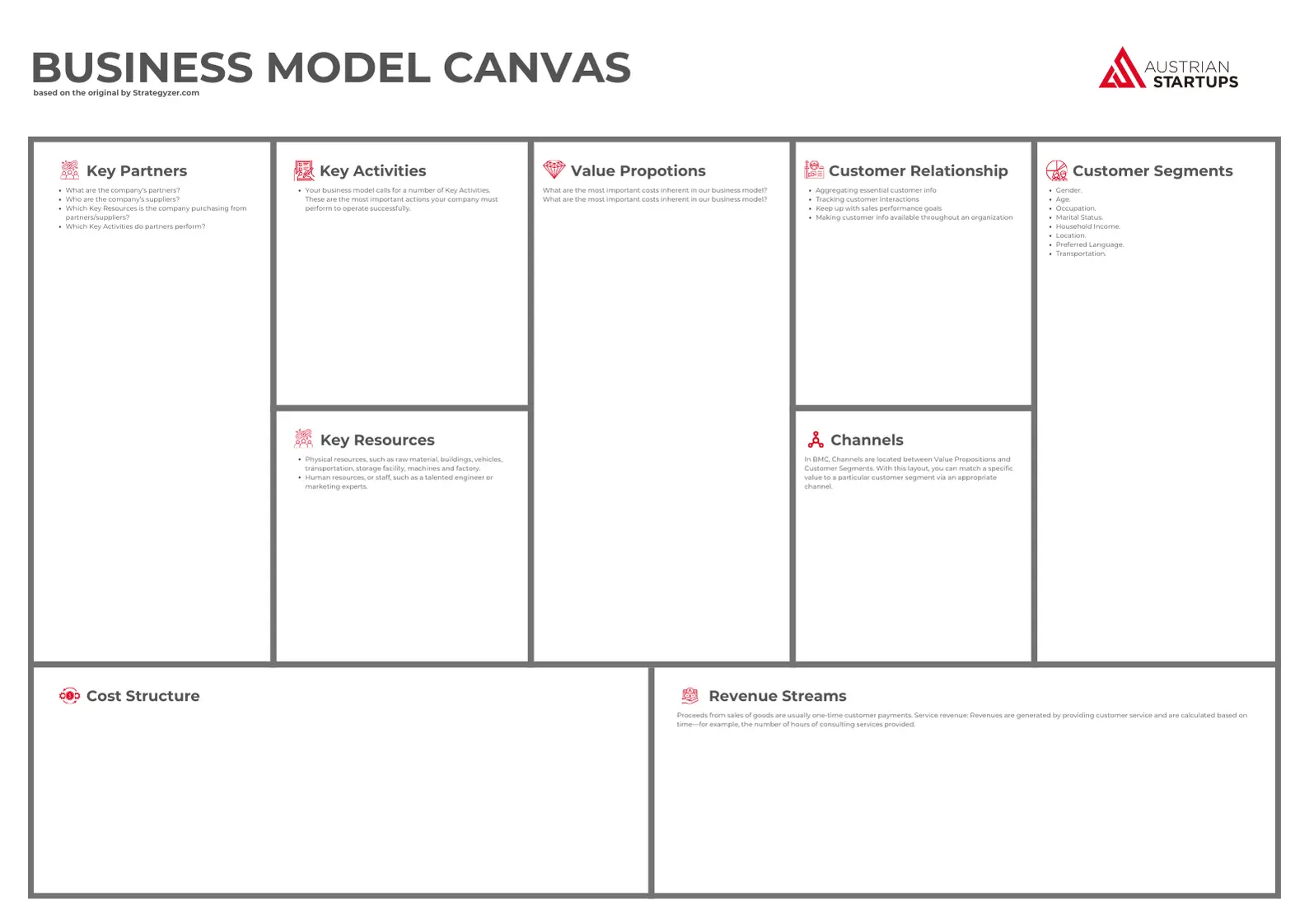
Download an A1 printable canvas from our resources
Benefits of the Business Model Canvas for Startup Founders
-
Clarity and Focus: It provides a clear and concise representation of your business model, helping you focus on the most critical elements and identify areas for improvement.
-
Communication and Collaboration: It serves as a common language for communicating your business model to team members, investors, and stakeholders, fostering better understanding and alignment.
-
Iteration and Innovation: It encourages continuous evaluation and iteration of your business model as you gain feedback and learn from customer interactions.
-
Adaptability and Flexibility: It helps you adapt your business model to changing market conditions, evolving customer needs, and emerging opportunities.
Using the Business Model Canvas Effectively
To effectively utilize the BMC, follow these steps:
-
Gather Insights: Understand your target market, conduct market research, and gather customer feedback to identify key segments, needs, and preferences.
-
Structure and Categorize: Map out your value propositions, channels, customer relationships, revenue streams, key resources, activities, partnerships, and cost structure within the canvas.
-
Visualize and Iterate: Use a visual tool or template to create a tangible representation of your business model. Continuously review and refine it as your business evolves.
-
Share and Collaborate: Discuss your BMC with team members, investors, and potential partners to gain insights and identify potential areas for improvement.
-
Adapt and Evolve: As your business grows and faces new challenges, adapt your BMC to reflect changes in customer preferences, market trends, and competitive landscapes.
Conclusion
The Business Model Canvas is an invaluable tool for startup founders to navigate the complexities of business creation and growth. Its simplicity, flexibility, and ability to foster collaboration make it an essential resource for entrepreneurs seeking to transform their ideas into successful enterprises. By embracing the BMC, startup founders can gain clarity, focus, and adaptability, paving the way for sustainable long-term success.